 Superseded
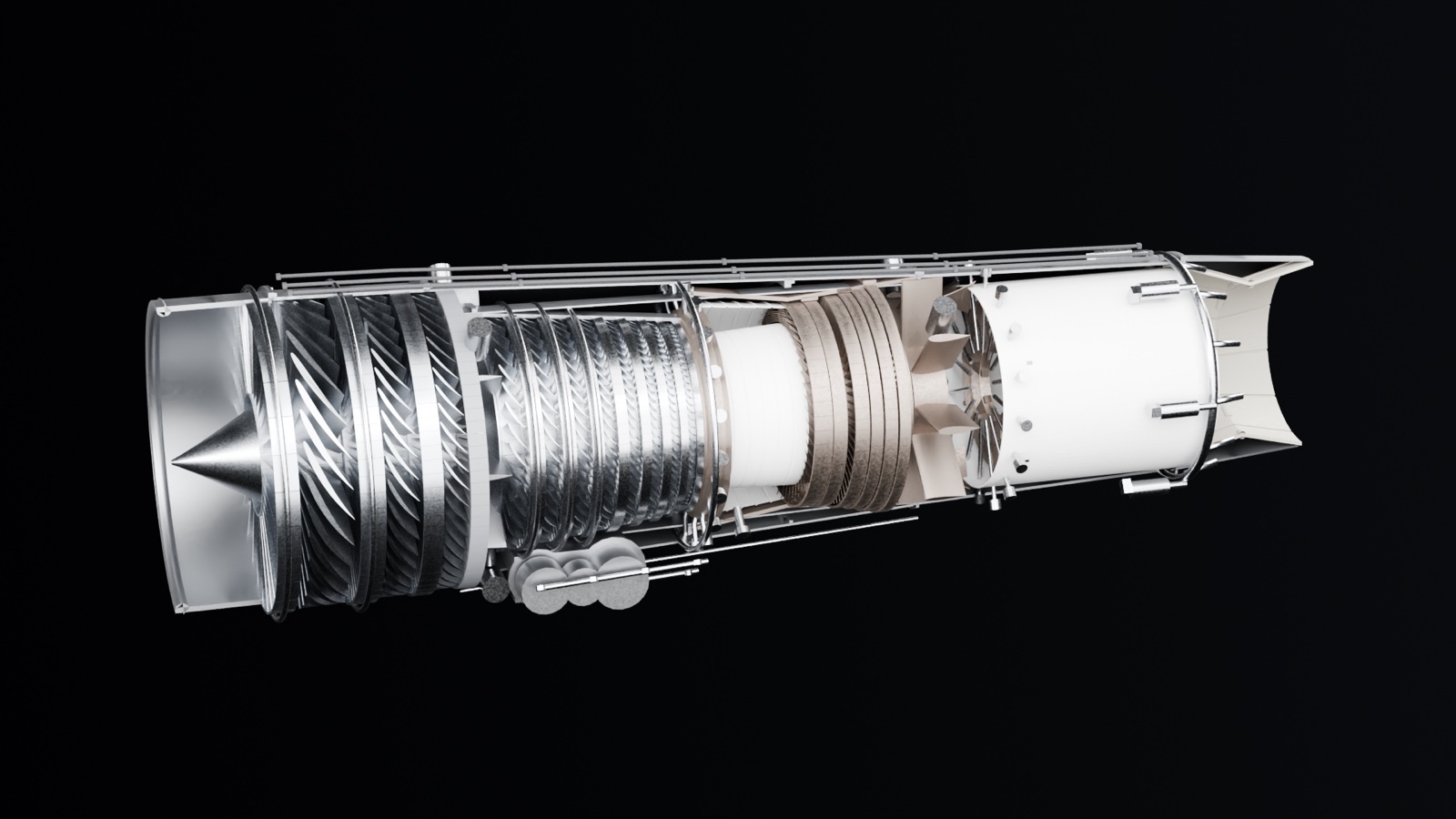
F110-GE-129
The augmented low-bypass turbofan in the F-16C/D: 29,000 lbf with afterburner, 2,044 lofted airfoils.
Two engines and the vehicles built around them. Every part is generated in Blender from one Python file of real dimensions, checked by its own audits, drawn to scale, and flown through a computational wind tunnel.
An original adaptive-cycle fighter engine, and the twin-engine agile fighter designed around it. Move the pointer across a drawing to lift it off the render beneath.
A hybrid V8, and a fan car built around it to beat Formula 1 on a Formula 1 circuit.
The car and the jet through OpenFOAM, on their geometry as built, beside every aerodynamic number we had published. Where the solver disagreed, the number was corrected, and twice the design was.
The aviation pair before Aether and Nyx replaced it: a model of a production turbofan, and a model aircraft built around it at 1:33. Kept as it was, at tag v1.
SupersededThe augmented low-bypass turbofan in the F-16C/D: 29,000 lbf with afterburner, 2,044 lofted airfoils.
 Superseded
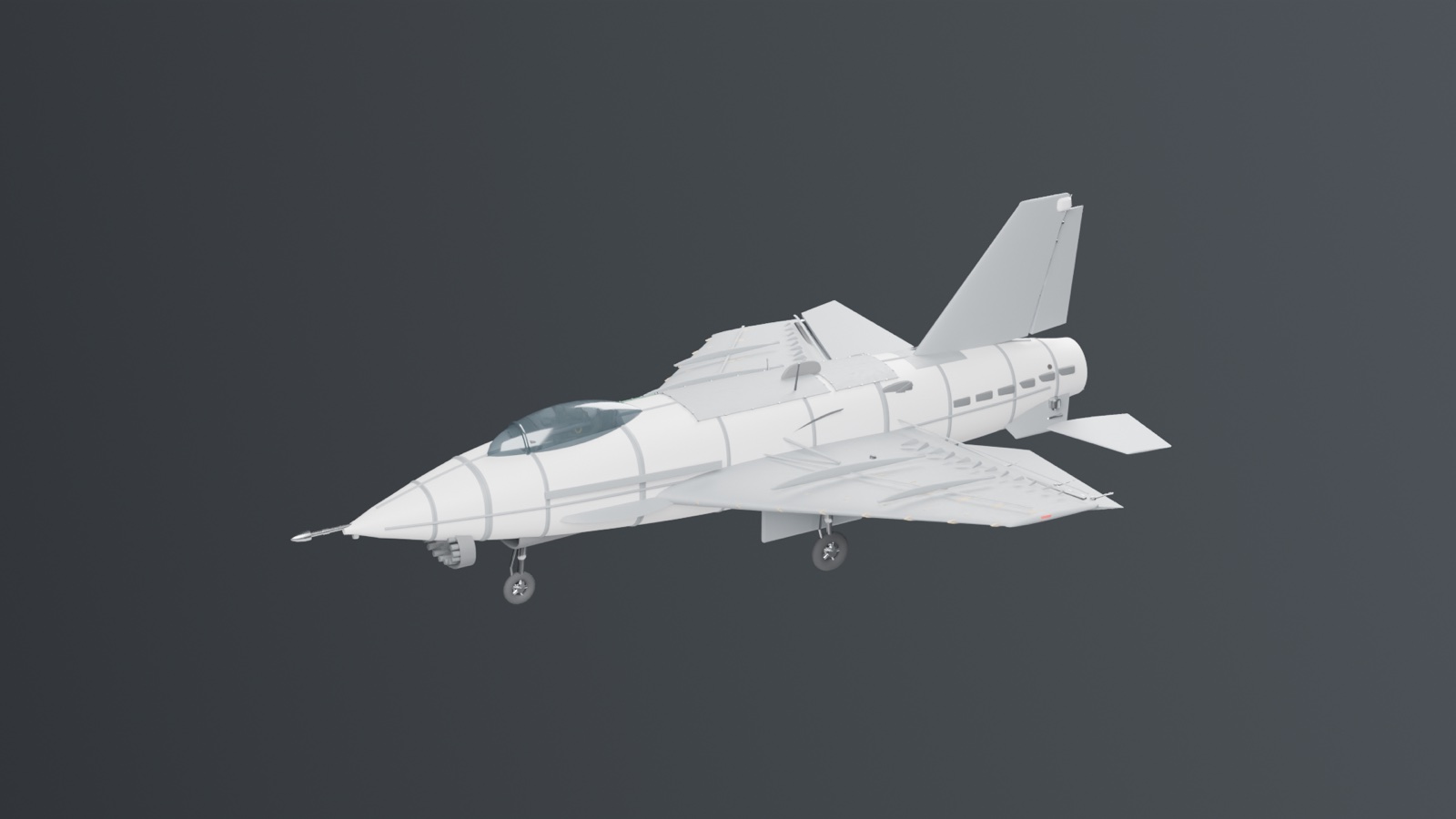
A cropped-delta model aircraft inside a 500 by 300 mm envelope, 558 g all up, on the F110 at 1:33.
Each project has a spec.py carrying every measurement, mass and material. No geometry
module holds a literal dimension: if a number describes the machine, it lives in one place.
make verify measures what was built and asserts it against the specification: envelope,
clearances, joints, kinematics, stability, performance. It has caught real design errors.
make drawings writes an A1 package: a general arrangement and a sheet for every assembly,
third-angle projection, dimensioned, with a numbered parts list.
The aerodynamics went through OpenFOAM on the geometry exactly as built. It found the car's fans could not breathe and its balance was wrong, and both were fixed in the models.